
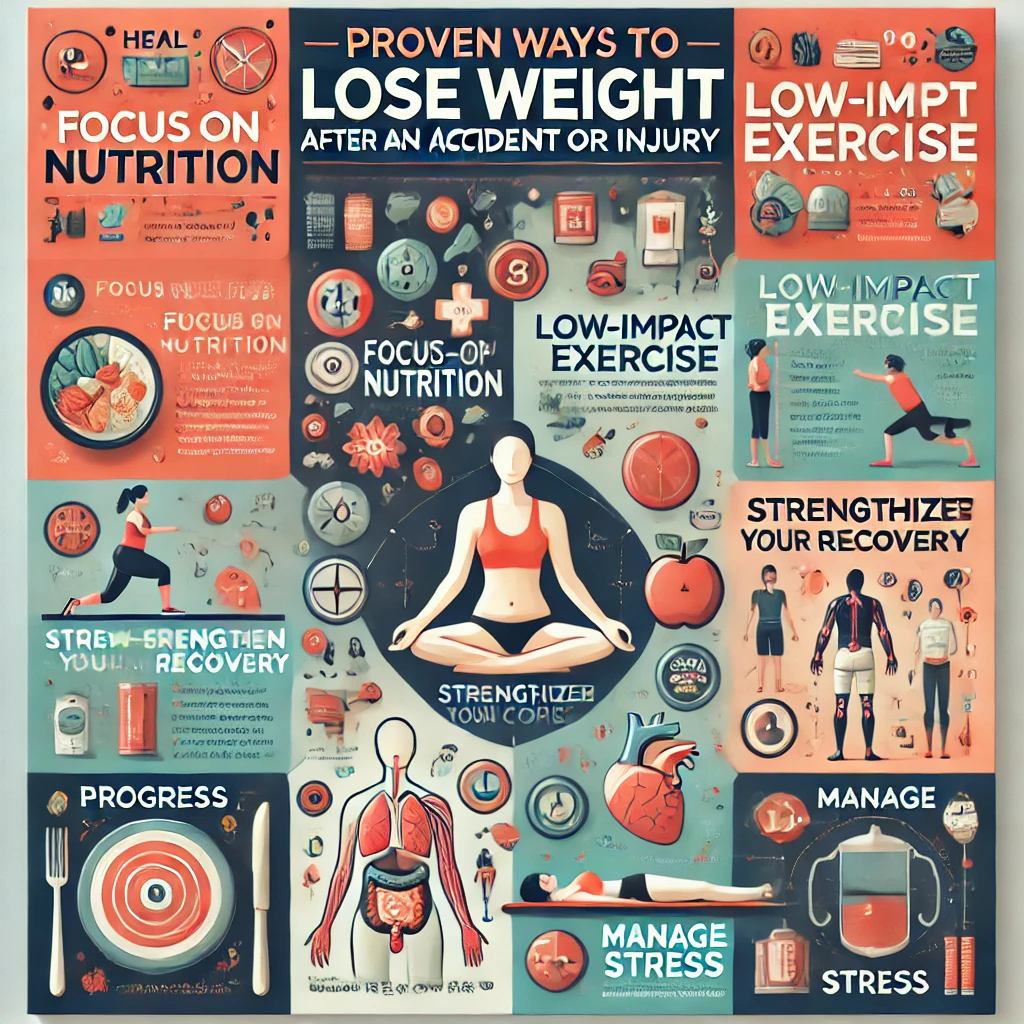

Recovering from an accident or injury can make weight loss challenging, especially if mobility is limited. However, with the right strategies, you can manage your weight effectively while supporting your recovery.
1. Focus on Nutrition More Than Exercise
Since physical activity may be restricted, diet plays a crucial role in weight loss.
✔ Prioritize Protein: Helps preserve muscle mass and supports healing.
✔ Eat More Fiber: Keeps you full longer and aids digestion.
✔ Reduce Sugary & Processed Foods: Prevents fat gain while maintaining energy levels.
✔ Stay Hydrated: Helps control hunger and supports recovery.
💡 Smart Swaps:
🍽️ Swap white rice for quinoa or cauliflower rice.
🍽️ Choose Greek yogurt over sugary snacks.
🍽️ Use healthy fats like avocados and nuts instead of processed oils.
2. Adjust Your Calorie Intake Without Starving
Since you may be less active, your body burns fewer calories than before.
✔ Use a calorie tracking app to find a realistic daily intake.
✔ Reduce portion sizes without cutting out essential nutrients.
✔ Focus on nutrient-dense foods rather than empty calories.
💡 Example Meal Adjustments:
🍗 Swap large portions of rice for extra vegetables.
🥑 Use healthy fats in moderation—portion out nuts and oils.
🍵 Drink water before meals to reduce overeating.
3. Do Safe & Low-Impact Movements (If Approved by a Doctor)
Even if you’re injured, some form of movement may be possible:
✔ Chair exercises or resistance band workouts for upper body.
✔ Seated yoga or stretching to maintain flexibility.
✔ Water therapy (if allowed) to reduce stress on joints.
💡 If You’re Bedridden:
👐 Try deep breathing and isometric exercises (contracting muscles without movement).
🖐️ Gentle mobility exercises can prevent stiffness and improve circulation.
4. Prioritize Sleep for Recovery & Weight Loss
Lack of sleep increases hunger hormones (ghrelin) and stress hormones (cortisol), leading to weight gain.
✔ Aim for 7-9 hours of quality sleep.
✔ Create a relaxing bedtime routine (no screens before bed).
✔ Keep a consistent sleep schedule to support metabolism.
5. Manage Stress & Emotional Eating
Injury can lead to frustration, stress, or boredom—which can trigger emotional eating.
✔ Practice mindful eating—recognize true hunger vs. emotional cravings.
✔ Engage in stress-reducing activities (meditation, reading, journaling).
✔ Swap comfort foods for healthier alternatives (dark chocolate instead of candy, herbal tea instead of soda).
6. Stay Hydrated & Limit Liquid Calories
✔ Drink plenty of water—sometimes thirst is mistaken for hunger.
✔ Avoid sugary drinks, sodas, and excessive alcohol.
✔ Opt for green tea or black coffee to boost metabolism.
💡 Pro Tip: Adding lemon, mint, or cucumber to water can make hydration more enjoyable!
7. Be Patient & Track Your Progress
✔ Celebrate small wins—any progress is better than none.
✔ Take progress photos & measurements rather than relying only on the scale.
✔ Consult a doctor or physical therapist to ensure you’re making safe choices.
Final Thoughts
Weight loss after an injury takes time, but with proper nutrition, safe movement, and lifestyle adjustments, you can achieve results without harming your recovery.
Would you like a meal plan or safe exercise recommendations based on your specific injury? 😊


Can you be more specific about the content of your article? After reading it, I still have some doubts. Hope you can help me.
Your article helped me a lot, is there any more related content? Thanks!